Sapphire
CorundumJewelryWiki Editorial·7 sources·Reviewed 2026-08-04
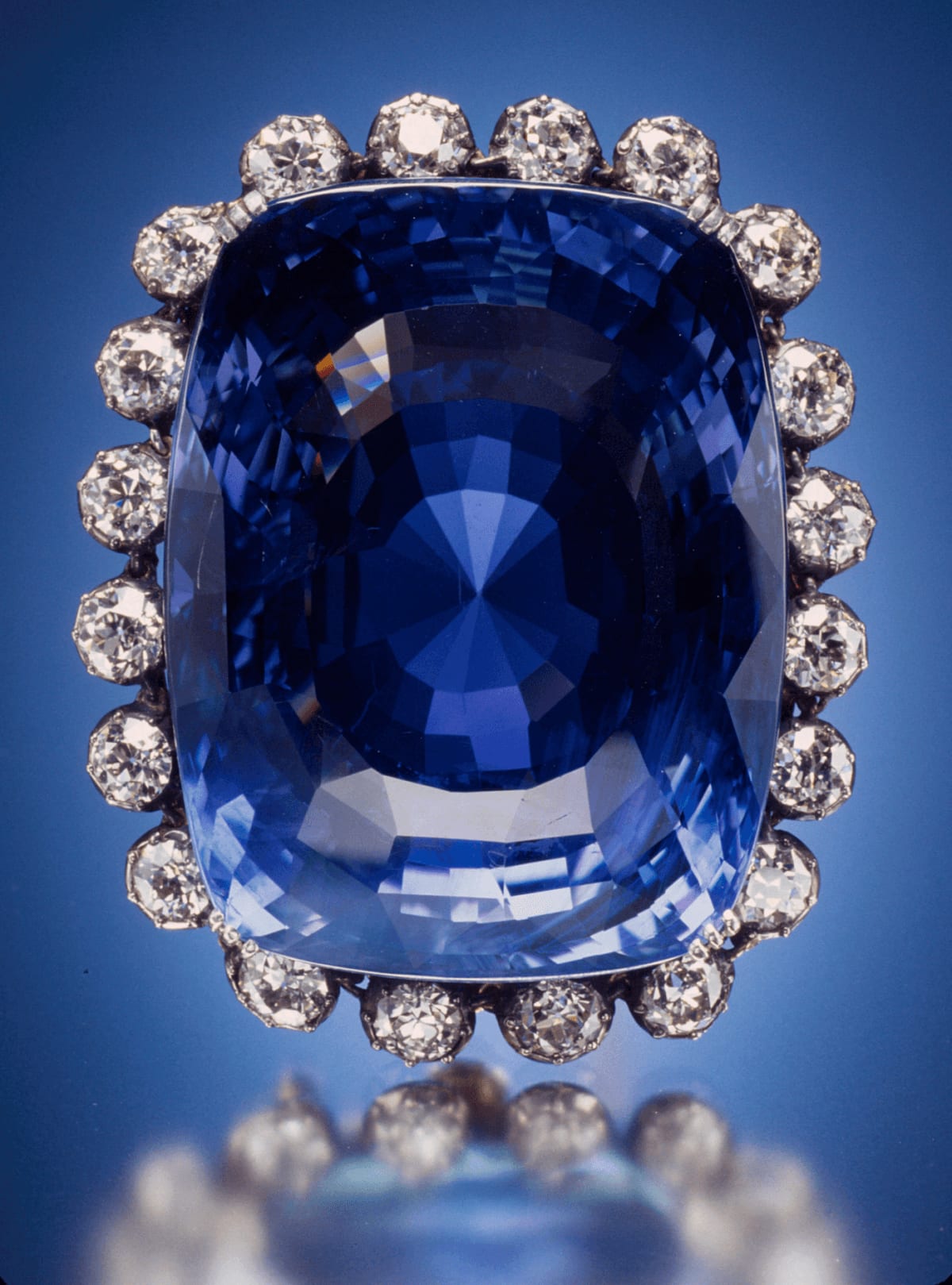
The same mineral species as ruby. Every corundum that is not red is called sapphire — the difference is colour, not durability.
Properties
| Property | Value | Authority |
|---|---|---|
| Mohs hardness | 9 [1] | — |
| Toughness | Excellent. [1] | — |
| Specific gravity | 3.95–4.03 [2] | — |
| Chemical formula | Al2O3 Read from the species entry, Corundum. A variety shares its species’ formula — unlike hardness or density, which vary with composition and are not inherited here. [7] | — |
| Crystal system | Trigonal [4] Read from the species article, Corundum. | — |
| Common treatments | Heating can intensify or even induce blue colour, remove “silk” to improve transparency, or recrystallise the silk to strengthen a star — GIA records that pale sapphires once discarded during mining are heated to a desirable blue. Lattice diffusion of beryllium is widespread in the trade and extremely difficult to detect with certainty, confirmable only by a qualified laboratory. Irradiation induces bright orange in pale yellow stones, and GIA is explicit that this colour is NOT stable and fades on exposure to light. [6] | — |
| Suitability for daily wear | Excellent. The most durable common alternative to diamond for an engagement ring. [1] | — |
| Care cautions | Transparent sapphire requires caution in an ultrasonic; STAR sapphire should not be cleaned in one at all. Avoid ultrasonics on any stone that has been heat-treated to enhance colour. [5] | — |
| Birthstone month | September [3] | — |
Sources
- GIA — More than the Mohs Scale: Understanding Gem Durability — Gemological Institute of America (GIA 4Cs, "More than the Mohs Scale" (14 March 2016))
- International Gem Society — reference charts (Mohs hardness, specific gravity, refractive index) — International Gem Society (IGS reference charts)
- Jewelers of America — Birthstones — Jewelers of America (Jewelers of America, Birthstones)
- Wikipedia — mineral article infoboxes (crystal system) — Wikipedia contributors (Wikipedia mineral infoboxes)
- GIA — Ultrasonic Cleaners for Gems: What You Need to Know — Gemological Institute of America (GIA 4Cs, Ultrasonic Cleaners for Gems)
- GIA — An Introduction to Gem Treatments — Gemological Institute of America (GIA, An Introduction to Gem Treatments (Robert Weldon))
- Handbook of Mineralogy — Mineral Data Publishing / Mineralogical Society of America (Handbook of Mineralogy, Mineral Data Publishing)