Aventurine
QuartzJewelryWiki Editorial·4 sources·Reviewed 2026-08-04
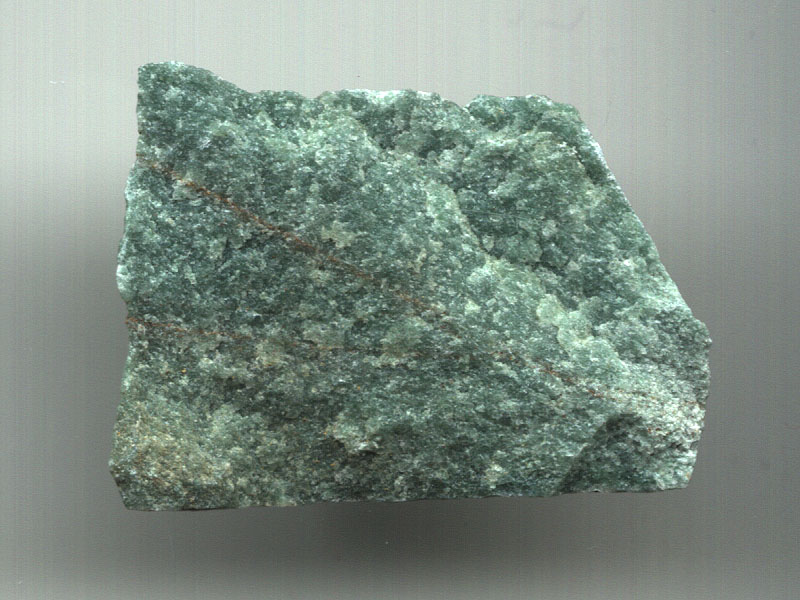
Quartz with platy mineral inclusions producing aventurescence — a glittering sheen. Green aventurine takes its colour from fuchsite mica.
Properties
| Property | Value | Authority |
|---|---|---|
| Mohs hardness | 7 [1] | — |
| Specific gravity | 2.64–2.69 [1] | — |
| Chemical formula | SiO2 Read from the species entry, Quartz. A variety shares its species’ formula — unlike hardness or density, which vary with composition and are not inherited here. [4] | — |
| Crystal system | Trigonal [2] Read from the species article, Quartz. | — |
| Common treatments | A quartz, and GIA records that quartz is occasionally coated with metal oxides to create colours rarely seen naturally, may be irradiated, and is among the materials dyed since ancient times. Tiger’s eye quartz is specifically named among the materials bleached to lighten colour. [3] | — |
| Care cautions | Coated quartz scratches along facet edges and junctions. If dyed, avoid acetone, alcohol and prolonged sunlight. [3] | — |
Sources
- International Gem Society — reference charts (Mohs hardness, specific gravity, refractive index) — International Gem Society (IGS reference charts)
- Wikipedia — mineral article infoboxes (crystal system) — Wikipedia contributors (Wikipedia mineral infoboxes)
- GIA — An Introduction to Gem Treatments — Gemological Institute of America (GIA, An Introduction to Gem Treatments (Robert Weldon))
- Handbook of Mineralogy — Mineral Data Publishing / Mineralogical Society of America (Handbook of Mineralogy, Mineral Data Publishing)