Citrine
QuartzJewelryWiki Editorial·5 sources·Reviewed 2026-08-04
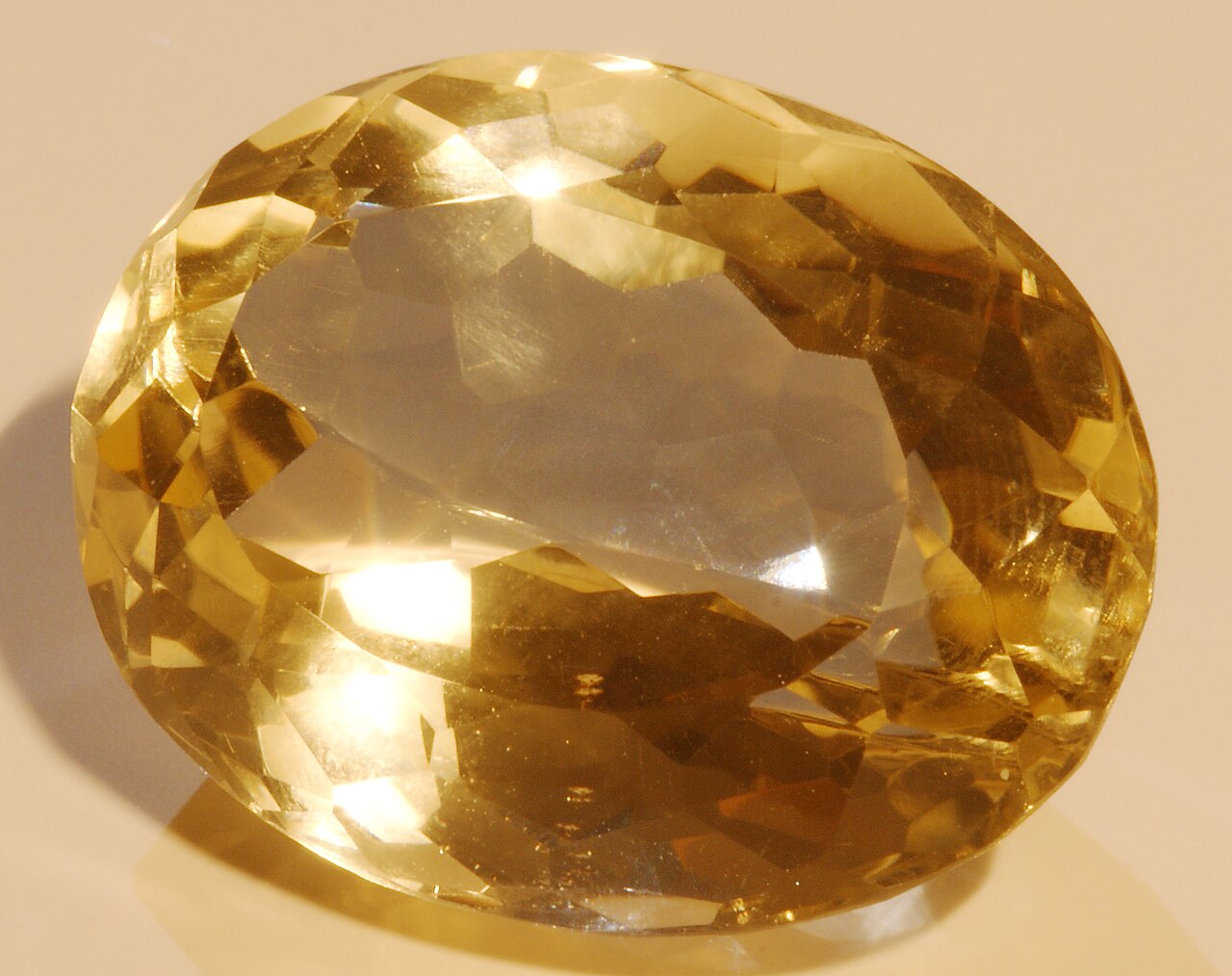
The yellow-to-orange variety of quartz, and November’s birthstone alongside topaz. Most commercial citrine is heat-treated amethyst — a treatment that must be disclosed in US sales.
Properties
| Property | Value | Authority |
|---|---|---|
| Mohs hardness | 7 [1] | — |
| Chemical formula | SiO2 Read from the species entry, Quartz. A variety shares its species’ formula — unlike hardness or density, which vary with composition and are not inherited here. [5] | — |
| Crystal system | Trigonal [3] Read from the species article, Quartz. | — |
| Common treatments | Much commercial citrine is heat-treated amethyst — GIA states plainly that some forms of amethyst can be heated and turned into citrine. The treatment is durable and permanent under normal handling. Quartz is also irradiated, and a combination of irradiation followed by heating produces green quartz. [4] | — |
| Birthstone month | November — shares November with topaz. [2] | — |
Sources
- International Gem Society — reference charts (Mohs hardness, specific gravity, refractive index) — International Gem Society (IGS reference charts)
- Jewelers of America — Birthstones — Jewelers of America (Jewelers of America, Birthstones)
- Wikipedia — mineral article infoboxes (crystal system) — Wikipedia contributors (Wikipedia mineral infoboxes)
- GIA — An Introduction to Gem Treatments — Gemological Institute of America (GIA, An Introduction to Gem Treatments (Robert Weldon))
- Handbook of Mineralogy — Mineral Data Publishing / Mineralogical Society of America (Handbook of Mineralogy, Mineral Data Publishing)